The Dirty Side of 3D Printing: What Actually Happens to Your Failed Prints
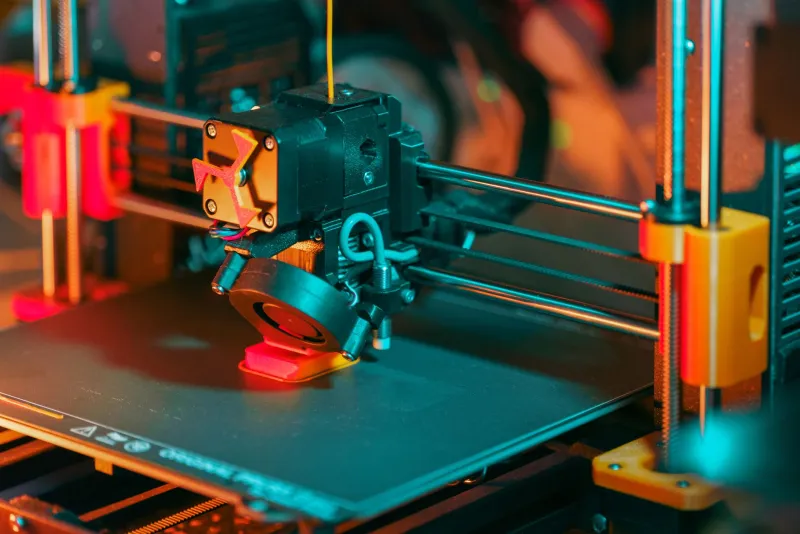
Every maker knows the sound. That subtle shift in the printer's rhythm around layer 40 that means something has gone wrong. You walk over, confirm the spaghetti nightmare, cancel the print, and peel the mess off the bed. Then — almost automatically — you toss it in the trash.
Multiply that moment by the estimated 2.1 million FDM printers currently operating in American homes and small shops, and you start to get a sense of the scale of the problem nobody in the 3D printing community talks about loudly enough.
This isn't a hit piece on 3D printing. The technology is genuinely transformative for makers, engineers, and small manufacturers. But the community has developed a habit of glossing over its waste problem, and that's worth examining honestly.
How Much Waste Are We Actually Talking About?
Hard numbers are difficult to pin down because home manufacturing waste isn't tracked the way industrial waste is. But we can do rough math.
A conservative estimate puts the average hobbyist failure rate somewhere between 10 and 20 percent of print volume — higher for beginners, lower for experienced operators with dialed-in machines. If the average active home printer user runs through 2–3 kg of filament per month, that's potentially 200–600 grams of failed or discarded material per person, per month.
Across millions of machines, that adds up to thousands of tons of plastic annually — most of it PLA, PETG, or ABS — entering the waste stream with no clear recycling path.
The Recycling Myth
Here's where it gets uncomfortable: most 3D printing filament is not practically recyclable through standard municipal programs.
PLA (polylactic acid), the most popular filament in the hobbyist market, is technically compostable — but only under industrial composting conditions involving sustained high temperatures. Your backyard compost pile won't do it. Most municipal compost programs won't accept it either, because PLA contamination ruins batches of organic compost. And standard plastic recycling facilities typically can't process it because it melts at a different temperature than conventional plastics and can jam sorting equipment.
ABS and PETG have similar issues. They're technically recyclable thermoplastics, but the mixed-material reality of most failed prints — supports fused to model surfaces, different filament colors combined, multi-material prints — makes them difficult to process economically.
In short: when you throw a failed PLA print in your blue bin, there's a good chance it ends up in a landfill anyway.
What's Actually Being Done
The good news is that the ecosystem around filament reclamation is developing, even if it's not yet mainstream.
Filament recyclers — desktop machines that shred and re-extrude failed prints into new filament — have been available for several years. The Felfil Evo and the Artme3D recycler are two examples that have gotten traction in the maker community. The concept is straightforward: shred your waste plastic, feed it into an extruder, and spool new filament.
The reality is messier. Color contamination is nearly impossible to avoid, meaning your recycled filament will be some shade of muddy gray-brown. Moisture absorption during the shredding and storage process affects print quality. And the machines themselves require calibration and maintenance that adds friction to an already niche workflow.
For dedicated recyclers willing to put in the work, it's viable — especially for shops running high volumes of single-color prints. For the average hobbyist? The barrier is still high.
Community filament recycling programs are a more accessible middle ground. Organizations like the Precious Plastic network have chapters across the US that accept plastic waste and process it into new materials or products. Some makerspaces have started collecting failed prints for bulk processing. These programs are patchy geographically, but they're growing.
Manufacturer take-back programs are rare but exist. A handful of filament brands have experimented with mail-back programs for waste plastic. The economics are challenging — shipping waste plastic across the country isn't cheap — but it's a model worth watching.
Upcycling: The Low-Tech Alternative
Not every solution needs to be high-tech. Some of the most practical approaches to print waste involve rethinking what "waste" means.
Failed prints with structural integrity can often be repurposed directly. A botched enclosure panel becomes a test piece for new filament. A failed decorative print becomes a sanding and finishing practice subject. Smaller failed pieces get used as filler material inside large hollow prints.
Some makers have gotten creative with resin waste specifically — mixing failed resin prints into epoxy pours to create unique composite art pieces. Others use FDM waste as aggregate in concrete or plaster projects.
These approaches won't solve the systemic problem, but they reduce the volume of material entering the waste stream and build a more intentional relationship with materials.
The Honest Reckoning
The 3D printing industry — from hardware manufacturers to filament brands to the broader maker media ecosystem — has generally preferred to emphasize the technology's creative and manufacturing potential over its environmental costs. That's understandable from a marketing standpoint. It's less defensible as a long-term community position.
The makers who are most serious about sustainability aren't waiting for the industry to solve this. They're designing for minimal support structures, dialing in first-layer calibration to reduce failed prints, sourcing recycled-content filaments (brands like Filamentive and 3D-Fuel offer options), and actively seeking out local recycling programs.
None of that is as exciting as a new printer announcement or a viral print. But it's the kind of operational discipline that separates a responsible maker from someone who just happens to own a printer.
The community built the culture of open-source design sharing, of helping strangers fix their machines, of pushing the technology forward from the ground up. It can build a culture of responsible waste management too. It just has to decide it matters.