Beyond the Start Button: Why Your Best Operator Might Also Need to Think Like a Designer
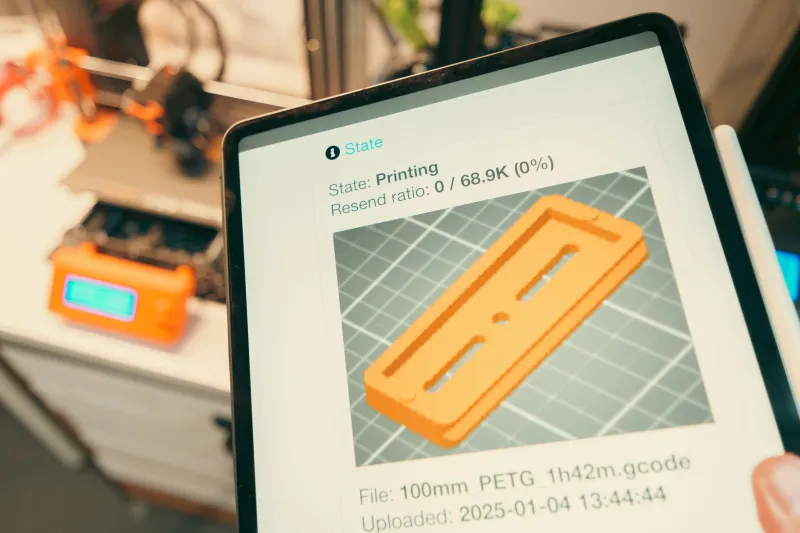
There's a version of a 3D print shop that runs like a vending machine. A file comes in, someone loads the plate, hits print, and waits. Parts come out. Parts get shipped. Repeat.
That model works — until it doesn't. Until a customer sends a file with unsupported geometry that nobody flags. Until a part fails in the field and nobody on the floor can explain why. Until a job runs six hours only to produce a part that was never going to meet spec, because the operator had no idea what spec even meant in this context.
The shops that are winning right now aren't just running machines well. They're staffed by people who understand the intent behind a design — and that's a fundamentally different skill set than knowing how to level a bed or swap a nozzle.
The Operator Gap Is Real, and Most Shops Are Ignoring It
Talk to any print shop owner who's scaled past a handful of machines and they'll usually admit the same thing: finding good operators is hard. Finding great operators — people who can troubleshoot a print failure, assess a CAD file for printability, and communicate intelligently with an engineer on the other end of a job — is genuinely difficult.
The traditional hiring pipeline doesn't help. A lot of shops pull from general manufacturing backgrounds or train people on the job with a focus on machine operation. That's not wrong, exactly, but it leaves a significant gap. Knowing how to use a slicer is not the same as understanding why certain wall thicknesses fail, or how layer orientation affects tensile strength in a functional part, or why a customer's tolerance callout is physically impossible with a given material.
Those gaps cost money. Failed prints, reprints, customer complaints, wasted filament, and jobs that had to be outsourced because nobody in-house had the judgment to catch a problem before it became expensive — these are the real costs of treating operators as interchangeable button-pushers.
Design Thinking Isn't Just for Designers
Here's the reframe that forward-thinking shop owners are making: design thinking is a production skill.
It's not about turning your operator into a CAD jockey. It's about giving them enough fluency in design intent that they can act as a quality filter before a job ever starts printing. Can they look at a file and ask the right questions? Can they recognize when a support structure is going to create a surface finish problem the customer won't accept? Do they understand the difference between what a part looks like and what it needs to do?
Shops that build this capability into their operators aren't just reducing waste — they're building a layer of technical intelligence into their workflow that becomes a genuine differentiator. Customers notice when a shop catches a problem they didn't see themselves. That's not just good service; it's a reason to come back.
What a Training Framework Actually Looks Like
The good news is that building design-aware operators doesn't require sending everyone back to school for an engineering degree. Several American shops are doing this with structured in-house programs that layer knowledge incrementally.
Start with materials science basics. Operators don't need to memorize datasheets, but they should understand the behavioral differences between common materials — how PLA handles stress versus PETG, what ASA does in outdoor applications, why certain resins are brittle under impact loading. Even a few hours of focused training here pays dividends in fewer judgment errors on the floor.
Add DFM (Design for Manufacturability) literacy. There are solid free and low-cost resources for this — MIT OpenCourseWare, Coursera, and even YouTube channels built around FDM and SLA design principles. Curating a short reading list or video series and walking operators through it during slower production periods is a low-cost, high-return investment.
Build a failure library. This one's underrated. Document your reprints. Photograph failed parts. Note why they failed and what design or material choice contributed to the problem. Over time, this becomes an institutional knowledge base that new hires can learn from in weeks rather than months. Experienced operators who helped build it become de facto mentors.
Cross-train with your design staff. If you have in-house designers or engineers, create structured time for them to work alongside operators — not just to hand off files, but to explain the reasoning behind design choices. That context is exactly what most operators are missing, and it's sitting right there in your own building.
Hiring for Aptitude, Not Just Experience
The training piece matters, but so does who you're hiring in the first place. Some shops have started shifting their hiring criteria away from pure machine experience toward candidates who show problem-solving aptitude and curiosity about how things work.
Community college programs in engineering technology, industrial design, and even welding or machining tend to produce candidates who think in terms of part function — not just part production. Veterans with MOS backgrounds in maintenance or technical systems often carry exactly this kind of diagnostic mindset. Maker community members who've been building their own projects for years frequently have broader design instincts than someone who's only ever run production equipment.
The interview question that a lot of smart shop owners are starting to ask isn't "How many machines have you run?" It's "Tell me about a time you caught a problem before it became a problem." The answer tells you whether someone is operating on autopilot or actually thinking.
The Competitive Case for Doing This Now
American manufacturing is in a moment where skilled technical labor is scarce and the shops that build internal capability are going to be harder to compete with than the ones chasing the cheapest hourly rate. A print operator who can assess a file, flag a material concern, and communicate that clearly to a customer is not a commodity. They're an asset — and they're the kind of asset that helps you charge more, waste less, and retain clients who care about quality.
The shops treating their operators as interchangeable are going to keep fighting the same battles: reprints, callbacks, margin erosion, and high turnover from people who don't feel like they're growing. The shops investing in design-aware operators are building something harder to replicate than any single machine on their floor.
The start button is the easy part. Everything that happens before you push it — that's where the real skill lives.