Cheap Filament Is Quietly Destroying Your Printer (And Your Wallet)
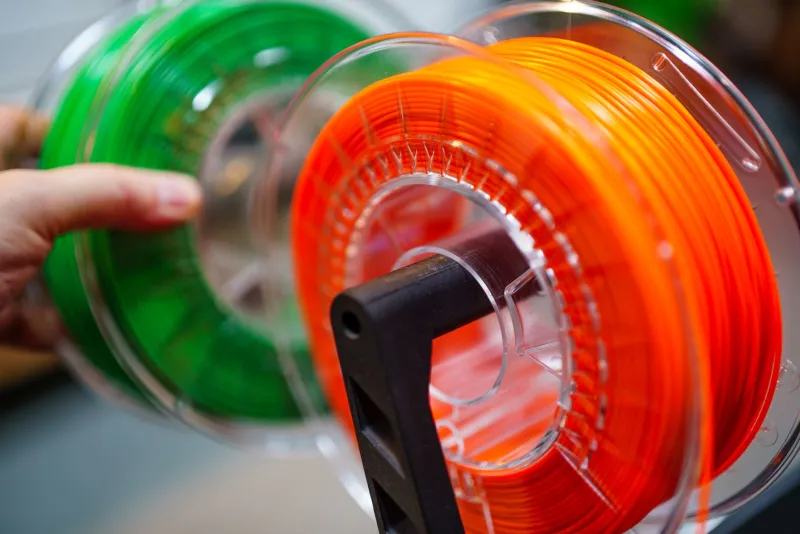
Let's be honest — when you're staring at two spools of PLA on Amazon and one is $12 and the other is $28, the cheaper one feels like a no-brainer. You're printing the same material, right? Same plastic, same process, same result.
Except that's not how it works. Not even close.
The 3D printing community has a quiet, persistent problem: filament quality variance is enormous, and the consequences of buying cheap material aren't just bad prints. They're blown nozzles, clogged extruders, wasted hours, and in some cases, printers that need serious repair work after just a few months of use. When you add it all up, that $12 spool might be costing you ten times its sticker price.
The Stuff Inside the Spool Actually Matters
Premium filament manufacturers invest heavily in two things that cheap brands skip: material consistency and moisture control. Diameter tolerance is the big one. High-quality PLA holds a diameter of 1.75mm within ±0.02mm or better across the entire spool. Budget filament? You might see swings of ±0.10mm or worse.
That might sound like a rounding error, but your printer's extruder is a precision system. When filament diameter fluctuates, so does the volume of material being pushed through your hotend. You get under-extrusion, over-extrusion, layer inconsistencies, and eventually — clogs. And clogs aren't just annoying. They can jam your nozzle permanently, damage your PTFE liner, or strip your extruder gears.
Moisture is the other hidden killer. Cheap filament is often stored poorly before it reaches you, and many no-name brands use lower-grade raw pellets that absorb humidity faster. Wet filament pops, bubbles, and strings during printing. It also degrades the structural integrity of your finished part. If you've ever heard that crackling sound mid-print, you already know what this costs you in failed jobs.
Running the Real Numbers
Let's talk actual dollars, because this is where things get uncomfortable.
Say you're running a mid-range FDM printer — something like a Bambu Lab P1S or a Creality K1 — and you print roughly 20 hours a week. Here's a rough breakdown of what filament quality actually costs across three tiers:
Budget Filament ($12–$16/spool) Expect a failure rate of anywhere from 15% to 30% on complex prints. Nozzle replacements come faster — many users report clogging every 3–5 spools with unknown-brand material, versus every 15–20 with quality filament. If your nozzle costs $8–$15 and you're swapping it every month, that's $100–$180 a year just in nozzles. Add in failed print material waste — easily 20–30% of your spool cost — and your "cheap" filament is running closer to $20–$22 per usable spool after losses.
Mid-Range Filament ($20–$28/spool) Brands like Polymaker, Hatchbox, and Overture land here. Diameter tolerances are tighter, moisture control is better, and failure rates drop dramatically — often below 8% on well-calibrated machines. Nozzle wear slows. You spend more per spool but use more of each one. Real cost per successful print drops noticeably.
Premium Filament ($30–$45/spool) Brands like Prusament, Bambu's own line, or eSUN's specialty materials. These are engineered to spec, with documented tolerances and consistent color batches. Failure rates under 5% on dialed-in printers. If you're producing client work or functional parts, the cost of a failed print isn't just material — it's your time, your deadline, and your reputation.
The Downtime Problem Nobody Talks About
Here's what the spool price doesn't capture: your time.
A clog that takes 45 minutes to clear — cold pull attempts, disassembly, maybe a nozzle swap — isn't just annoying. If you're running a side hustle or small production operation, that's 45 minutes of billable time gone. At even $50/hour (a conservative rate for custom print work), that's $37.50 lost on a single clog event. Have that happen four times a month and you've burned $150 — more than the price difference between budget and premium filament for an entire month of printing.
Printer longevity is the long game version of the same problem. Abrasive particles, inconsistent additives, and poor moisture management in cheap filament accelerate wear on your hotend assembly, your extruder drive gear, and your PTFE tube. These aren't catastrophic failures — they're slow degradation that shows up as print quality drift over time. You chase calibration issues for weeks before realizing the hardware itself has worn down.
So What Should You Actually Buy?
This isn't a case for always buying the most expensive filament on the shelf. Context matters.
For prototyping and test prints where aesthetics don't matter? Mid-range filament is your sweet spot. Good enough quality, reasonable price, low failure rate. For functional parts, client deliverables, or anything going into a portfolio? Spend the extra $10–$15 per spool. It's not a luxury — it's insurance.
For specialty materials — carbon fiber, flexible TPU, high-temp nylon — never cheap out. These materials are already demanding on your hardware. Poor-quality specialty filament is where printers go to die.
And regardless of what you buy, store it right. A quality filament ruined by humidity is just expensive bad filament. Get a dry box or at minimum a sealed container with desiccant. If you're serious about printing, a filament dryer like the Sunlu S2 or the PolyDryer is a one-time investment that pays back fast.
The Bottom Line
The 3D printing world loves to talk about hardware specs, slicer settings, and build plate adhesion. Filament quality sits in the background, treated like a commodity. It isn't.
The math is pretty clear once you run it honestly: the cheapest filament on the market is frequently the most expensive option when you account for failed prints, hardware wear, and lost time. Buying quality material isn't about being a brand snob. It's about understanding that your printer is a tool, and the material you feed it determines how long it stays one.