Printed Parts, Real Consequences: What Every American Maker Needs to Know About Liability and Warranties
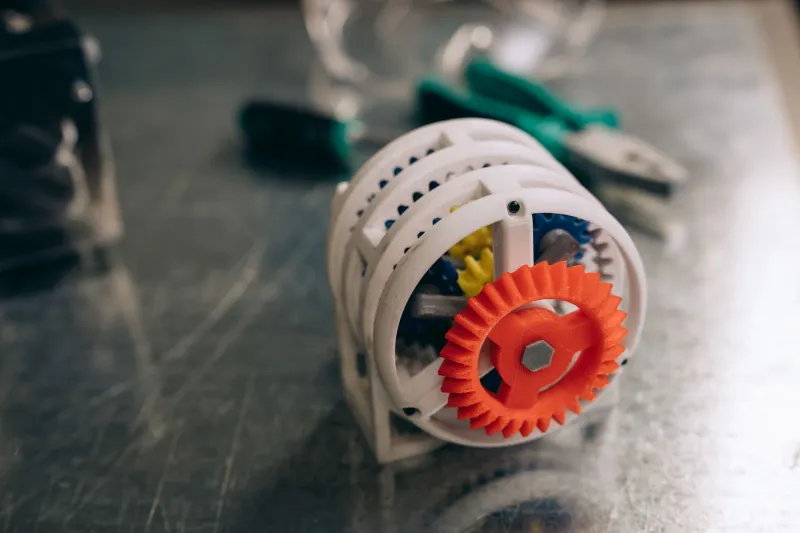
Most 3D printing conversations revolve around what you can build. Fewer revolve around what happens when something you built breaks — especially if it breaks while doing a job that matters. A bracket holding up a display at a trade show is one thing. A mounting component in a commercial vehicle is something else entirely.
As American makers move further into functional, mission-critical applications, the legal terrain gets complicated fast. Product liability, material certifications, warranty disclaimers — these aren't just corporate concerns anymore. If you're selling printed parts to businesses or end users, they're your concerns too.
The Liability Gap Most Makers Don't Know Exists
Here's the uncomfortable truth: the 3D printing industry has outpaced the legal frameworks designed to govern it. Most product liability law in the US was written with traditionally manufactured goods in mind. Injection-molded parts, machined components, stamped metal — these have decades of case law, industry standards, and certification pathways behind them.
Additive manufacturing? It's newer, more variable, and in many product categories, still operating in a gray zone. That variability is actually a key legal vulnerability. Two parts printed from the same file on the same machine can have measurably different mechanical properties depending on ambient conditions, material lot, and a dozen other factors. That inconsistency is exactly the kind of thing a plaintiff's attorney loves to highlight.
None of this means you shouldn't sell functional printed parts. It means you need to think carefully about how you do it.
Material Certification: The Paper Trail That Protects You
One of the strongest defensive tools available to makers is documentation — specifically, material certifications from your filament or resin suppliers. When you can demonstrate that the material used in a given part meets a published specification (tensile strength, heat deflection temperature, chemical resistance, etc.), you shift a meaningful portion of liability back toward the material supply chain.
This matters in court, but it also matters in the practical reality of business disputes. If a client claims a printed bracket failed prematurely and you can produce a Certificate of Conformance showing the material met its rated specs, that's a fundamentally different conversation than shrugging and saying "it's just PLA."
For high-stakes applications, makers should be sourcing from suppliers who provide lot-level traceability — meaning you can tie a specific part back to a specific batch of material with documented properties. Some domestic suppliers have gotten serious about this. Seek them out.
What Your Warranty Should (and Shouldn't) Say
A warranty is a promise. A disclaimer is a boundary. You need both, and they need to be written carefully.
Many small shops ship parts with no warranty language at all, which is actually a risky position — it leaves the terms of the sale entirely open to interpretation under state and federal law, including implied warranty provisions you may not even be aware of.
At a minimum, functional printed parts should ship with written documentation that covers:
Intended use — Clearly define what the part is designed to do and the conditions it's rated for. If a bracket is rated for static loads up to a certain weight at room temperature, say so explicitly.
Material and process disclosure — Identify the material used, the printing process, and any post-processing steps. This creates a record and sets expectations.
Exclusions — Spell out what the warranty does not cover. Modifications, misuse, exposure to conditions outside the rated parameters, and loads exceeding the design specification should all be excluded.
Limitation of liability — This is the clause that caps your exposure. It won't protect you from gross negligence, but it can prevent a warranty claim from turning into a catastrophic damages award.
This isn't the kind of language you want to write yourself off the top of your head. A one-time consultation with a business attorney familiar with product liability — even just a two-hour session — is money very well spent.
How Leading Shops Are Handling Mission-Critical Prints
The shops operating at the more serious end of the functional parts market have developed internal protocols that go well beyond standard warranty language.
Some maintain printed batch records for every production run — logging the material lot, machine used, print date, operator, and key parameters. Others run mechanical test coupons alongside production parts, keeping the coupons on file as physical evidence of the batch's properties.
A few shops serving aerospace-adjacent or medical-adjacent clients have pursued third-party process qualification — essentially having their print processes audited and documented by an independent technical body. This is expensive and time-consuming, but it opens doors to clients who simply won't buy without it.
For most small and mid-sized American makers, that level of rigor isn't necessary or practical. But the underlying principle — document everything, test what matters, and create a traceable record — scales down to any operation.
Insurance: The Part Everyone Ignores Until It's Too Late
General liability insurance is table stakes for any business. But if you're selling functional printed parts, you should be having a specific conversation with your broker about product liability coverage. Standard GL policies often have exclusions or sublimits that may leave you underprotected if a part fails and causes injury or property damage.
Product liability premiums vary widely based on the types of parts you make, the industries you serve, and your claims history. For most small shops, the annual cost is manageable — and far less than the cost of a single uninsured claim.
Some makers have also found value in errors and omissions coverage, particularly those offering design or consulting services alongside physical parts. If your design recommendations contribute to a failure, E&O coverage can be the difference between a bad week and a business-ending event.
Building a Reputation on Reliability
Beyond the legal mechanics, there's a business case for taking this seriously. The American makers who are winning long-term contracts with industrial and commercial clients aren't just the ones with the best printers. They're the ones who can hand a procurement manager a documentation package and say, "here's exactly what this part is, what it's made of, how it was tested, and what we stand behind."
That kind of professional credibility is hard to fake and hard to replicate. It's also, frankly, not that complicated to build — it just requires treating your process like the serious manufacturing operation it is.
The parts you print are real. The applications they serve are real. The legal exposure is real. The good news is that the protection available to you is real too — you just have to reach for it.