After the Unboxing: How Weak Manufacturer Support Is Quietly Bleeding American Print Shops Dry
After the Unboxing: How Weak Manufacturer Support Is Bleeding American Print Shops Dry
You did your homework. You watched the YouTube reviews, downloaded the spec sheets, compared build volumes and layer resolution until your eyes crossed. Then you pulled the trigger on a machine that looked like an absolute steal on paper. Six months later, you're staring at a printer that's been offline for three weeks because a replacement hotend assembly is sitting in a warehouse somewhere overseas, and the only support you can reach is a chatbot that keeps pointing you to a PDF you've already read four times.
This scenario isn't rare. It's playing out in garages, small shops, and professional makerspaces across the country, and it's costing American makers far more than the price difference they thought they were saving when they chose budget hardware over a better-supported alternative.
The Spec Sheet Trap
Most equipment decisions in the additive manufacturing space are driven by what's measurable at the point of sale. Layer height. Build volume. Print speed. Filament compatibility. These are real factors that matter — nobody's saying they don't. But they paint an incomplete picture of what it actually costs to own and operate a machine over time.
The metrics that don't appear on any spec sheet are the ones that kill your margins: average downtime per incident, time-to-resolution on support tickets, parts availability in the continental US, and how aggressively a manufacturer pushes firmware updates that either fix problems or create new ones. These aren't abstract concerns. They're the difference between a machine that earns its keep and one that becomes an expensive shelf ornament.
A printer sitting idle isn't just annoying — it's a liability. If you're running a print-as-a-service operation, missed deadlines mean lost clients. If you're manufacturing components for a product line, downtime creates inventory gaps that ripple downstream. The machine doesn't have to be catastrophically broken to cost you real money. It just has to be down long enough, often enough.
What "US Support" Actually Means (And What It Doesn't)
A lot of manufacturers advertise US-based support, and technically they're not lying. But there's a wide spectrum between a dedicated domestic team with real engineers and a small customer service operation that reroutes tickets to overseas staff after business hours.
When you're evaluating a printer purchase, it's worth asking some pointed questions before you commit:
- Where are support tickets actually handled? Is there a US-based technical team, or is that a marketing claim that evaporates when you dig into it?
- What's the average response time? Not the promised SLA — the actual, documented average that existing customers experience.
- Are replacement parts stocked domestically? A manufacturer might have a US office but still fulfill parts orders from a distribution hub in another country, adding days or weeks to your repair timeline.
- How are firmware updates managed? Are they optional or forced? Do they have a track record of introducing new bugs? Is there rollback support?
These aren't gotcha questions. Any manufacturer confident in their support infrastructure should be able to answer them without hesitation. If you get vague answers or marketing-speak, that's your signal.
The Hidden Math of Downtime
Let's put some rough numbers to this. Say you're running a small professional shop with two or three machines, generating somewhere around $4,000 to $6,000 a month in revenue. A printer goes down. If it takes two weeks to resolve — between diagnosing the issue, waiting on parts, and getting back to full operation — you're potentially looking at $1,000 to $2,000 in lost throughput, depending on how well you can redistribute jobs across your other hardware.
Do that twice in a year and you've erased the savings you thought you were getting by choosing the cheaper machine. Do it three or four times and you're in the red on that purchase, full stop.
Now factor in the soft costs: the hours you spent on hold, the time your team spent troubleshooting instead of printing, the client relationships that got strained because a deadline slipped. None of that shows up in a simple revenue calculation, but it's real cost.
Spare Parts Availability: The Overlooked Dealbreaker
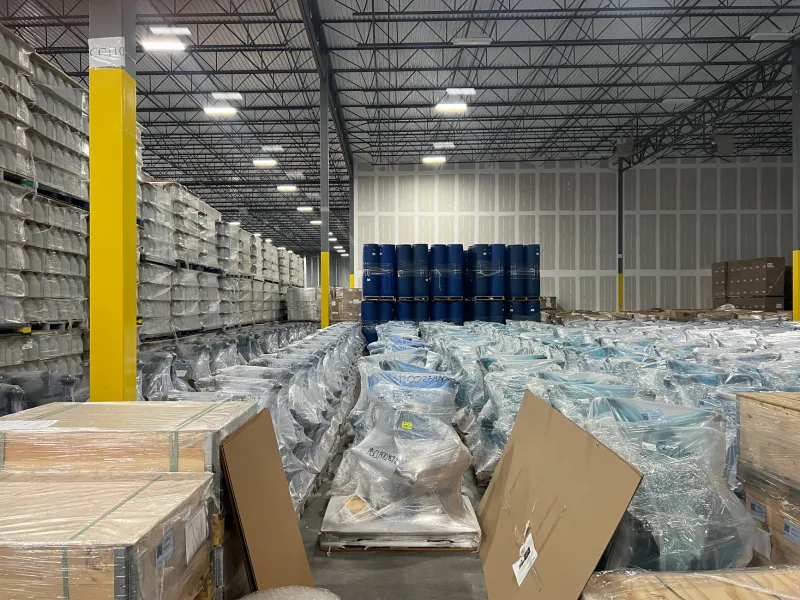
Consumable and wear components — nozzles, build plates, extruder gears, heater blocks, belts — are the lifeblood of any active print operation. Machines that see heavy use chew through these parts faster than casual users expect, and if your manufacturer doesn't maintain reliable domestic inventory, you're at the mercy of international shipping timelines and customs delays every time something needs replacing.
The worst-case version of this problem happens when a manufacturer discontinues a product line or exits the US market entirely. Suddenly you're hunting for third-party alternatives that may or may not be compatible, or cannibalizing parts from a second machine to keep the first one running. It's a mess that's entirely avoidable if parts availability is part of your evaluation criteria from the start.
Look for manufacturers who either stock parts through US-based distributors or maintain their own domestic fulfillment. Even better, find out whether third-party suppliers produce compatible components — that kind of ecosystem support is a strong indicator that a machine has genuine staying power in the market.
Firmware: The Support Issue Nobody Talks About
Firmware is one of those things that most buyers don't think about at all during the purchase process, and then think about constantly once something goes sideways. A bad update can change print behavior, introduce connectivity issues, or brick features that were working perfectly. And if the manufacturer isn't transparent about their update process or doesn't offer rollback options, you're stuck.
The better manufacturers treat firmware updates the way serious software companies do: with release notes, staged rollouts, and genuine acknowledgment when something goes wrong. The less reliable ones push updates silently, offer minimal documentation, and essentially tell you to figure it out when users report regressions.
Before buying, search community forums and Reddit threads for the specific model you're considering. If you find a pattern of firmware complaints, unresolved bugs, or users warning others away from updates, weight that heavily.
Vendors Who Actually Show Up
This isn't about naming names in a way that reads like a sponsored post, but it's worth knowing what good support looks like in practice so you can recognize it when you see it.
The manufacturers who earn loyalty from serious American makers tend to share a few traits: they have active community forums where company engineers actually participate, they publish real documentation rather than just FAQ pages, they maintain US-based technical contacts for business customers, and they stand behind their machines with warranty processes that don't require you to fight for every repair.
Talk to other makers in your space before you buy. Local makerspaces, regional fabrication communities, and professional networks like those found at trade events are goldmines of unfiltered equipment experience. The people who've owned a machine for 18 months will tell you things no review site will.
Buy the Relationship, Not Just the Machine
At the end of the day, purchasing a 3D printer is less like buying a tool and more like entering a service relationship. The machine is just the beginning. What you're really signing up for is years of firmware updates, occasional part replacements, troubleshooting calls, and moments when something unexpected breaks and you need help fast.
A manufacturer who disappears after the sale isn't a partner — they're a vendor who's already moved on to the next customer. American makers building real businesses can't afford that kind of relationship. Evaluate support like you evaluate specs, because when a machine goes down at the worst possible moment, the only thing that matters is how fast someone picks up the phone.