Beyond the Build Plate: The Real Skills That Separate Thriving Makers From Ones Just Getting By
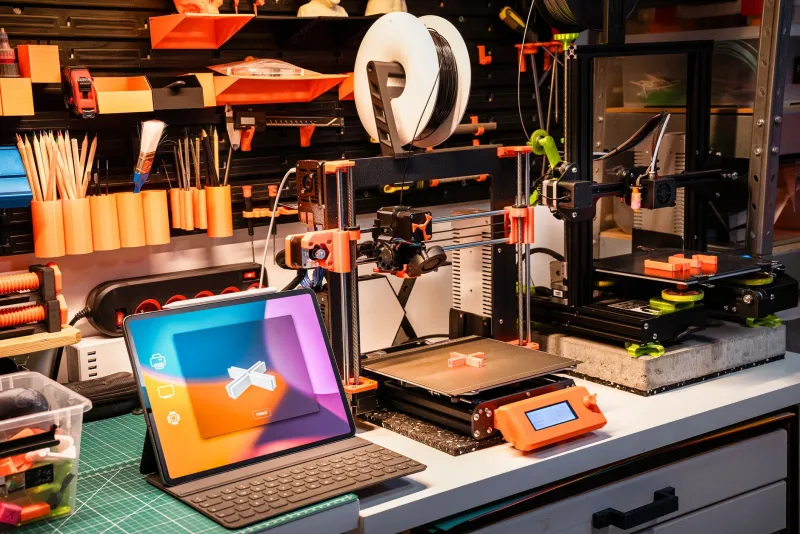
Let's be honest about something. The barrier to operating a 3D printer has never been lower. The machines are better, the software is more forgiving, and there's a YouTube tutorial for virtually every problem you'll encounter in your first year. Knowing how to run a printer is table stakes — it's the entry fee, not the competitive advantage.
So what actually separates the makers who are clearing six figures from the ones who are perpetually breaking even? It's not the machine. It's not even the material knowledge, though that matters. It's a collection of skills that most makers never formally develop because nobody told them they needed to.
Here's the honest map of what that skill stack looks like.
Material Science: More Than "Which Filament for Which Job"
Most makers learn material selection through trial and error — PLA for prototypes, PETG for functional parts, ASA for outdoor use. That's a start, but it's a surface-level understanding that will cap your growth.
The makers who command premium pricing understand why materials behave the way they do. They can speak intelligently about tensile strength, glass transition temperatures, moisture absorption, and how layer orientation affects anisotropic properties in printed parts. That knowledge lets them have credible conversations with engineers and procurement managers — the people who actually sign purchase orders for serious work.
You don't need a materials engineering degree to get there. MIT OpenCourseWare has free introductory materials science content. Coursera offers accessible polymer science courses. And the Stratasys and Formlabs material datasheets — even if you're not running their equipment — are genuinely educational resources for understanding how to characterize and communicate material performance.
Quality Control: Documenting What You Already Know
Here's a pattern that shows up constantly in growing maker shops: the owner has excellent instincts about part quality but those instincts live entirely in their head. They can look at a print and know something's off. They just can't explain it in writing, and they definitely haven't built a process that lets someone else catch the same issues.
Quality control is a learnable discipline, and for makers pursuing industrial clients, it's increasingly non-negotiable. First article inspection, go/no-go gauging, basic GD&T literacy, and documented inspection records aren't bureaucratic overhead — they're the language that manufacturing customers speak. Learning to speak it opens doors that stay closed to shops that operate entirely on vibes.
ASME's Y14.5 standard is the GD&T bible and worth owning a copy of. The American Society for Quality (ASQ) offers certifications and study materials that are well-recognized in manufacturing circles. Even a basic CMM course at a community college can transform how you communicate part quality to clients.
Basic Business Accounting: The Skill That Pays for Itself Immediately
This one is uncomfortable for a lot of makers because it feels far removed from the craft. But the number of talented print shops running on gut-feel pricing — or worse, losing money on jobs they think are profitable — is genuinely alarming.
You don't need to become a CPA. You need to understand gross margin versus net margin, how to build a real job costing model, and how to read a basic profit and loss statement. Those three things alone will change how you quote, how you prioritize jobs, and how you make equipment decisions.
QuickBooks Self-Employed is a reasonable starting point for solo operators. For a more structured education, the Small Business Administration's free online courses (sba.gov) cover the fundamentals without drowning you in jargon. And if numbers genuinely aren't your thing, hiring a bookkeeper for even a few hours a month to set up a proper system is one of the highest-ROI investments a growing maker shop can make.
Customer Communication: The Underrated Growth Lever
Technical skill gets you in the room. Communication skill keeps you there and gets you referrals.
Makers who can translate complex technical constraints into plain English — who can explain why a design needs to be modified for printability, or why a particular tolerance adds cost, without making the client feel stupid — consistently win more business and have better client relationships than equally skilled makers who can't.
This includes written communication. Clear, professional emails and quotes signal competence before the client ever sees a part. It includes project updates that manage expectations proactively rather than reactively. And it includes the ability to say no — to a bad-fit project, an unrealistic timeline, or a price that doesn't work — without burning the relationship.
Toastmasters is a genuinely useful resource for makers who want to improve their verbal communication skills. For writing, the book Made to Stick by Chip and Dan Heath is a practical guide to communicating complex ideas clearly. Neither requires a significant time commitment, and both pay dividends immediately.
Design Literacy: Understanding What You're Being Asked to Print
You don't have to be a CAD expert. But makers who can look at a design file and identify potential print failures, flag tolerance issues, or suggest geometry modifications that improve printability are far more valuable to clients than operators who just execute what's handed to them.
Fusion 360 is free for hobbyists and small businesses under a certain revenue threshold, and there's no excuse not to have at least a working knowledge of it. Being able to open a STEP file, measure a critical dimension, and communicate intelligently about what you're seeing separates you from commodity print services in a way that's hard to replicate.
The Compound Effect
None of these skills is particularly exotic. None requires years of dedicated study. But developed together, they create a professional profile that's genuinely rare in the maker space — someone who can build the part, explain the material, document the quality, price it correctly, and communicate the whole thing clearly to a client who's writing a real check.
That combination is what a six-figure maker actually looks like. The printer is just the tool they happen to use.